Sunday, March 17, 2013


Saturday, March 02, 2013
A Book Review in The Hindu

Just a yarn

Special ArrangementThe Teller of Tales, Bhaskar Ghose, Penguin Books India, Rs.299.
The reader’s perception is constantly challenged by one story after another.
As I flipped through The Teller of Tales, it reminded me of English August, a hugely successful novel by civil servant-turned writer Upamanyu Chatterjee. Bhaskar Ghose, like Upamanyu Chatterjee, also has been an IAS officer. So, I expected yet another humour-filled take on the dreariness of life of a bureaucrat in the Indian hinterland. But as I prodded through a couple of pages, I could realise that it was a different kind of book.
It is about two IAS officers and through this book we also get to know how the bureaucratic set up of our country functions and how the officers learn to survive when they are made to live in godforsaken places as the government’s representative. The tone of the novel, unlikeEnglish August, is not satirical and the story has been told in a matter of fact way except at some places where the narrative becomes surrealistic. The readers may at times feel lost when facts acquire the colour of fiction and fiction crosses the boundaries drawn by the facts. What is real and what is unreal keep challenging your perception.
The novel has a sluggish start but the speed picks up and you are sucked into the story after 10 to 12 pages. The narrator of this novel is Tapan Biswas, an IAS officer, who seeks refuge in theatre to escape the boredom of bureaucratic life. Another favourite pastime for him is listening to tales told by his friend Arunava, a fellow IAS officer. So, Arunava is “the teller of tales”. Arunava tells stories which are sometimes unbelievable and at times quite credible. You suspect that the story he has told can’t be believed but then he convinces you about the veracity of it. The irony is that the story that sounds real or credible turns out to be fiction or a figment of Arunava’s imagination.
As a reader you begin to suspect every move, but Arunava comes up with a story and again you believe him and then you come to know that you have been duped. This keeps happening till the end when Tapan discovers some disconcerting truth about his friend.
The denouement is heart-breaking, poignant and powerful, and you are made to think about Arunava long after you have finished the book.
Bhaskar Ghose writes with flair and fluency and is successful in capturing the essence of a bureaucratic life in a small town of eastern India. What I did not like about the book was that at many places the English translation was written in the parentheses next to Indian language words and they looked jarring. I think that was not required for the Indian edition and if it was necessary to have English translation of Indian words they could have been included at the end of the book as a glossary.
The Teller of Tales, Bhaskar Ghose, Penguin Books India, Rs.299.
CLICK HERE to read this review on the HINDU's website..
CLICK HERE to read this review on the HINDU's website..
Sunday, February 10, 2013
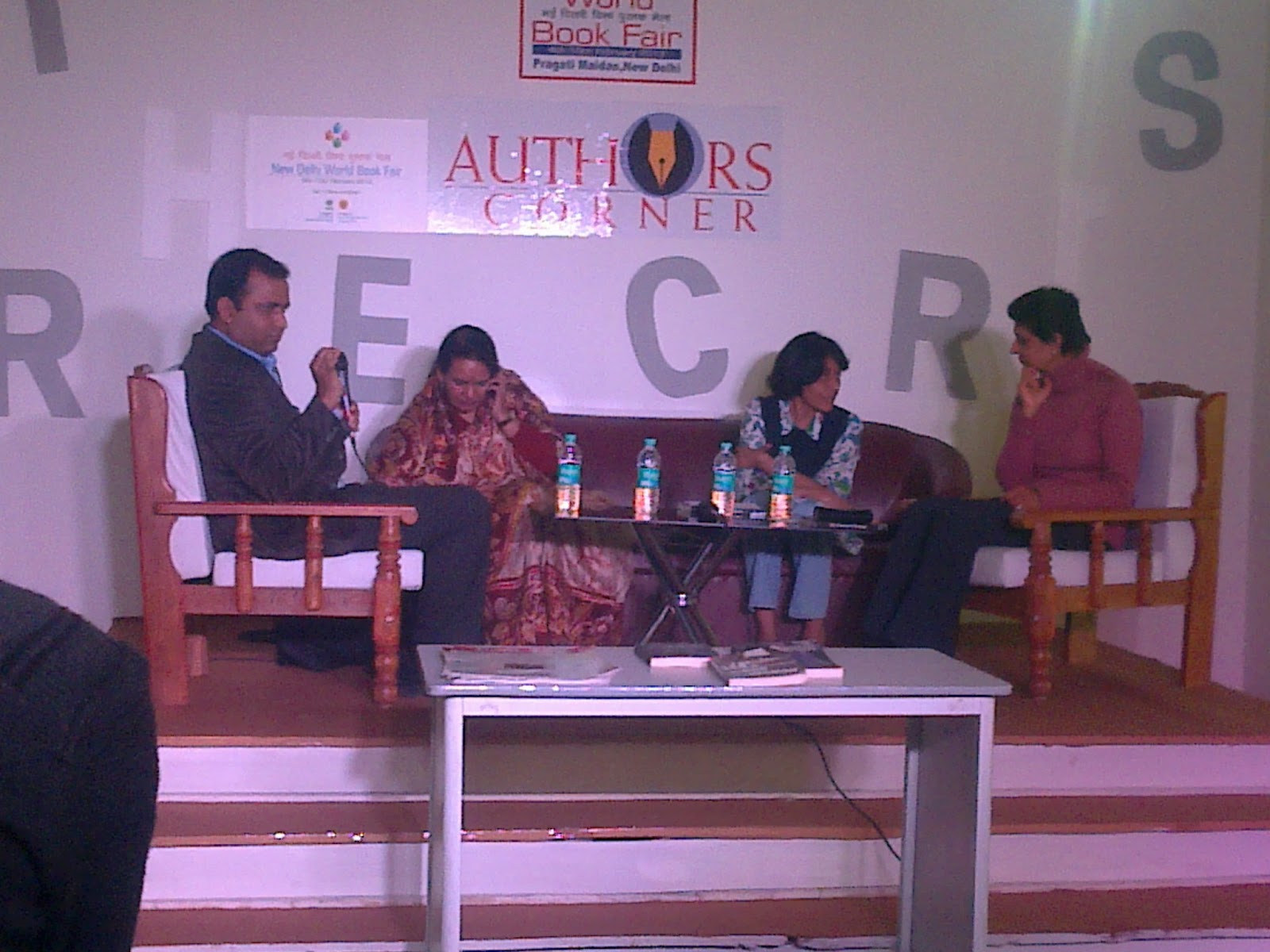
A Panel discussion at World Book Fair,2013
WITH Noor Zaheer ( Author of My God is A Woman)
and Mariam Karim-Ahlawat (Author of My Little Boat)


Sunday, January 06, 2013
My Review of The Selector of Souls
Murder in the womb
The dark gloomy corners of our country, rife with female foeticide, are illuminated in this insightful novel. ABDULLAH KHAN

The eye-catching blue cover of this intriguingly titled novel makes you take notice of it. The book reminds you of Kishwar Desai’s Witness the Night because it also has female foeticide as its theme. But unlike Kishwar’s book, there are many more issues on which the book focuses; we continually hear the reverberations of historical tragedies like the partition and the anti-Sikh riots of 1984. There is also a subtle reference to the rise of Hindu fundamentalism in 1990s.
The opening scene is, undoubtedly, the strongest part of the book. The author describes the brutal killing of an infant girl by her maternal grandmother, Damini, who wants to save her daughter from future distress for having so many daughters. Damini also finds justifications in religious scriptures for her heinous crime.
The cruelties shown by the father when he refuses to name his newly born third daughter and the mother who doesn’t breast-feed her child are as disconcerting as the final act of Damini.
Damini is one of two major characters of this novel. The other one is Anu, a woman stuck in a bad marriage. Anu has accepted Christianity but also follows the religion of her ancestors, i.e. Hinduism, and doesn’t find any contradiction between these two religions. Her only daughter, who is an outcome of marital rape, has been sent to Canada where she lives with Anu’s kind hearted and caring cousin. Here, in India, Anu decides to dedicate her life to social service and lands in Gurkot, a small village in the northern part of India, to work in a health clinic.
In this village, Anu aka Sister Anu comes across Damini, whom she has met once in Delhi. Damini joins Anu in her work. As a health worker Damini is involved in helping willing parents in sex selection of children. And here too she finds excuses to justify her ethically wrong actions. For her, killing a foetus is less brutal than killing an infant girl.
Through these two perfectly imagined characters, Shauna Singh Baldwin offers commentaries on the socio-political issues of contemporary India and you are made to see the dark gloomy corners of this largest democracy of the world that exist beyond the hype of “shining India”.
Culturally insightful and beautifully written, the novel covers many social and political matters that affected India during the last 65 years but, of course, the focus is on female foeticide and the status of women in Indian society.
The negative aspect of this book is its length as the pace of narrative is marred by the unnecessary use of expositions and too much cultural detail. The dialogues are also stretched beyond the desirable limits.
Thursday, December 27, 2012
A New Ghazal

ग़ज़ल
ख्वाबों के सलेट पे हसरतों के निशान कितने हैं
एक है दिल, उस दिल के अरमान कितने हैं
हर गली हर कुचे में आदमी ही आदमी
ये बताओ इस शहर में इंसान कितने हैं
चाँद तारों तक महदूद नही मजिल अपनी
क्योंकि सितारों के आगे भी जहान कितने हैं
मंदिरों और मस्जिदों में तुझ को तलाशाते हैं
या खुदा, इस बस्ती के लोग नादान कितने हैं
जीना दुश्वार हो गया इस दौर-ए -जदीद में
लेकिन मरने के तरीक़े आसान कितने हैं
--abdullah khan 'abd'
Wednesday, December 26, 2012
EK GHAZAL
ये अंधेरों का सफ़र तो गुज़र जायेगा
पर न जाने कब उजालों का शहर आयेगा
जब ख़त्म होंगे तारीकियों के सिलसिले
तब रात जायेगी और फिर सहर आयेगा
वहशत-ए -इश्क़ को न कमतर समझना
इस जुनूं में न जाने वो क्या कर जायेगा
पीछे आग का दरिया, सामने दश्त-ए -तन्हाई
ऐसे में वो शख्स जायेगा तो किधर जायेगा
छुपा रखे थे कई ख़्वाब हमने आँखों में
लगता है वो ख्वाब अब बिखर जायेगा
आज सातवाँ दिन है इस कर्फ्यू का 'अब्द'
वो ग़रीब तो अब भूखे ही मर जायेगा
अब्दुल्लाह खान 'अब्द '
Tuesday, December 18, 2012
Review of MUMBAI NOIR


About the Noir fiction, the well-known American publisher and
editor, Otto Penzler says, 'Look, noir is about losers. The characters in these
existential, nihilistic tales are doomed. They may not die, but they probably
should, as the life that awaits them is certain to be so ugly, so lost and
lonely, that they'd be better off just curling up and getting it over with.' In
other words, noir fiction can be defined as a subgenre of crime fiction which
is characterized by its cynical characters, the unsentimental depiction of
violence and sex and the bleak denouements. In the recent years, Brooklyn based
Akashic Books has popularized this genre by bringing out the series of noir
short stories. Each anthology in this series is based in a particular city and
explores the dark underside of that city. Earlier we had Brooklyn Noir, London
Noir, LA Noir, Chicago Noir, Paris Noir, etc. And the accent of India on the
horizon of the global economy inspired the publishers to add the Indian cities
to their list and Delhi Noir was published in 2009. And, now, it is the turn of
Mumbai.
Edited by author Altaf Tyrewala, the opening story of this anthology, 'Justice', is about a man called Ashagar Khan, who has been convicted by the court for his involvement in a bomb blast. He has committed that crime to seek some sort of revenge for losing almost everything in a communal riot. The author has weaved the narrative quite credibly telling us how a single act of violence can start the chain reactions of violence and counter violence. But, he is not able to carry the story till the end and the denouement appears to be hurriedly made up. It also breaks the basic principle of noir fiction by having a sentimental ending. Then, there is a story of twin brothers, both auto drivers, titled 'By Two'. The brothers suffer for being Muslims (at that poor Muslims) in this post 9/11 and post 26/7 world. The twins are tortured by the police each time a terrorist act happens in the city. The author, Devashish Makhija, has been able to invoke the sense of horror in readers: What if I were in their places? The descriptions of police brutality and helplessness of the main characters are heart -rending. True to the noir genre, the protagonists of this story have no chance. This is a though-provoking and probably the best story of the collection which raises questions about the way we are fighting terrorism. There are a handful of extremists who perpetuate this kind of atrocities on the masses and then there are innocent victims of these attacks. But there are even larger numbers of people who are neither involved in terrorism nor are direct victims of terrorist attacks but have been suffering more than the victims. They are the scapegoats. It has become customary on part of the police and intelligence agencies to pick up and torture Muslim youths (tribal youths in case of Maoist extremism) when terror strikes the country. The twins in this story, in short, are the victims of the shortcuts taken by the biased law enforcing agencies.
Edited by author Altaf Tyrewala, the opening story of this anthology, 'Justice', is about a man called Ashagar Khan, who has been convicted by the court for his involvement in a bomb blast. He has committed that crime to seek some sort of revenge for losing almost everything in a communal riot. The author has weaved the narrative quite credibly telling us how a single act of violence can start the chain reactions of violence and counter violence. But, he is not able to carry the story till the end and the denouement appears to be hurriedly made up. It also breaks the basic principle of noir fiction by having a sentimental ending. Then, there is a story of twin brothers, both auto drivers, titled 'By Two'. The brothers suffer for being Muslims (at that poor Muslims) in this post 9/11 and post 26/7 world. The twins are tortured by the police each time a terrorist act happens in the city. The author, Devashish Makhija, has been able to invoke the sense of horror in readers: What if I were in their places? The descriptions of police brutality and helplessness of the main characters are heart -rending. True to the noir genre, the protagonists of this story have no chance. This is a though-provoking and probably the best story of the collection which raises questions about the way we are fighting terrorism. There are a handful of extremists who perpetuate this kind of atrocities on the masses and then there are innocent victims of these attacks. But there are even larger numbers of people who are neither involved in terrorism nor are direct victims of terrorist attacks but have been suffering more than the victims. They are the scapegoats. It has become customary on part of the police and intelligence agencies to pick up and torture Muslim youths (tribal youths in case of Maoist extremism) when terror strikes the country. The twins in this story, in short, are the victims of the shortcuts taken by the biased law enforcing agencies.
Later,
two interesting stories take us to the darker alleys of the ‘Maximum City’
where we are told about the hijra culture, transvestite groups and their involvements in a
different kind of flesh trades. The first one, Corpse in the Gali by Smita Harish Jain, is so stark in its description of the process
of a man being initiated into Hijra community that it might induce nausea in the readers. Here the writing is very powerful and Smita is a talent to
watch out for. Another tale about the Mumbai Hijra Culture, Lucky 501, by Sonia Faleiro is equally impressive.
In The Watchman by Altaf Tyrewala , a guard has an intuition that somebody in
the housing society he guards, is going to die. And that troubles him so much
that he begins to behave irrationally. This simple but fascinating story has
grave and serious underlying meanings. It symbolises the restlessness and uncertainty of the megapolis life. On the
other hand, Chachu at Dusk by Abbas Tyrewala is a sentimental journey of a former Mafiosi
in to the old world of smugglers and bhais. The
protagonist in this story reminisces about his golden days when even underworld had
some semblance of ethics and principles. Though beautifully written, it hardly
fits into the category of the genre of noir stories.
Besides
all these, there are many more stories, each of them confiding some dark secrets
about Mumbai to their readers. Some stories, four to be exact, disappoint but
the rest are decent offerings. The editor could have been a bit more discriminnating while selecting
the stories for this anthology.
Saturday, December 15, 2012
My Review of Namita Gokhale's Book in December issue of The Book Review

The planet called earth has been a lonely
place for the women. You move across the continents and across the societies
and can see that the fair sex is treated more as some sort of asset than as
normal human being. Some societies, we feel, places the women on a higher
pedestal but that too is a ploy of the male-centric society to control the feminine
power. In India, it must be remembered, the Ganika
and Devdasi systems were also an
acceptable part of the same society which refers to women as Devi. In some
societies, especially in the Middle East, women are supposed to be the gifts of
God, so they should always be kept gift wrapped. The various kinds of burqas and veils were invented to keep
them covered.
The sound of women’s loneliness and the
eagerness to break free from the manacles of the male-centric social norms reverberate
in many of the stories of this collection of short stories by the seasoned
author Namita Gokhale.
‘Life in Mars’, the
opening story, tells us about the aloneness of Madhu Sinha, a widow and a
mother of three ‘duplicitous sons’ who have virtually abandoned her. As she is
fighting with her solitude and a debilitating illness, the arrival of Udit
Narain, a young man who feels chasing a girl or a job is sheer waste of time, suddenly
ignites a desire to live her life again. The author describes the dilemma as
well as the eagerness of a middle aged woman while planning to enter in to a
new relationship. The title story, The
Habit of Love, also has a widow as the protagonist. But unlike Madhu, the
main character of this story is not alone and has her daughters by her side but
that doesn’t stop her from grieving perpetually for the loss of her long dead husband.
When she goes on a vacation with her daughters to Nepal, one of her daughters, after
seeing the mountain peaks, asks her: how
does a mountain know it is a mountain?’ Discomfited by the question she
travels back to her happy days and thinks of her husband who might have given a
perfect answer to this question. And there she realises how she has internalised
the pain she had received by losing her husband and how ‘the habit of grief’
has created walls between her and her daughters. The opening sentence of this
story is very thought-provoking and it reads: The habit of grief can be as insidious as the habit of love.
There is another outstanding story that comments upon the position of a
woman in our society. In ‘Love’s Mausoleum’, Malika is deserted by her husband
for not bearing any child for him. She visits Taj Mahal and discovers that Shahjahan
had built Taj Mahal for his favourite wife Mumtaz. And , she is outraged when the guide explains to her about
the tombs built outside the Taj Mahal by emperor Shahjahan for his two other
wives because (unlike Mumtaz) they were childless. Time has changed, but not
the attitude of male chauvinistic society, she angrily thinks.
There
are two stories which have two famous female characters from Mahabharata as
their protagonists. In one story, Kunti tells us about her dilemma to reveal
that Karna is her son. Kunti as mother craves to hug her first born but the
fear of social stigma is so huge that she let her son go. What if Kunti were a
man? In the other story a maid servant
of Qandhari, wife of king Dhrutrashtra, tells us about her queen’s struggle as
a woman, as a wife and as a mother. In both the stories, Kunti and Qandhari are
not portrayed as the larger than life mythological characters but as the
regular women who have their own set of dreams and insecurities.
Each
of the thirteen stories is written in Namita’s signature style.
Sunday, December 02, 2012
A GHAZAL
ایک غزل
اشاروں سے تم نے کچھ تو کہا ہے
یا اٹھلانے کی یہ تیری ادا ہے
نگاہیں تو میری سب کہہ رہی تھی
تم نے نہ سمجھا تو کس کی خطا ہے
جو میں بے وفا ہوں یہ تم کہہ رہے ہو
کہ تم بے وفا ہو یہ سب کو پتہ ہے
جو تیرے لب پہ ہے وہ ٹھیک ہے
یہ بھی بتا دو جو دل میں چھپا ہے
قاتل ہے منشف اور مظلوم ملذم
یہ کیسی عدالت یہ کیسی سزا ہے
نمرود فرون سب کےسب مٹ گئے
سونچا ہے کیا تو کی کوئ خدا ہے
عبدللہ خان ---
एक ग़ज़ल
इशारों से तुमने कुछ तो कहा है
या इठलाने की ये तेरी अदा है
निगाहें तो मेरी सब कह रही थी
तुमने न समझा तो किसकी खता है
जो मैं बेवफा हूँ ये तुम कह रहे हो
कि तुम बेवफा हो ये सबको पता है
जो तेरे लब पे है वो ठीक है
ये भी बता दो जो दिल में छुपा है
क़ातिल है मुन्शिफ़ और मज़लूम मुल्ज़िम
ये कैसी अदालत ये कैसी सज़ा है
निमरूद फ़िरौन सब के सब मिट गए
सोंचा है क्या की तू कोई खुदा है
---अब्दुल्लाह खान
Tuesday, November 20, 2012
BOOK REVIEWS
TOKE
by JUGAL MODY (Originally published in The Book Review, November 2012)

Toke means puffing a pipe or pot filled with Marijuana. And true to
its title, you get high with the novel’s surreal plot. The story is set in
motion as you are introduced to Nikhil the protagonist who is fighting to come
out of ganja-induced hallucinatory
dreams. He is a regular guy with a regular job and suffers from regular bouts
of insecurity, jealousy and disillusionment. Toking is his only escape from his
not-so-interesting quotidian life. One day when he is in the middle of a cannabis induced hallucination, Lord Vishnu, the preserver God from the
Hindu trinity, makes an appearance and joins Nikhil and his friends in a
session of pot smoking. In between, He tells Nikhil the world is going to end
in next 72 hours and Lord Vishnu has no time for another incarnation to save
the world. So, He entrusts Nikhil with the responsibility of saving the
humanity from total destruction. He warns Nikhil if Lord Shiva, the destroyer
and reproducer of the trinity, comes to know about the imminent extinction of
the human race, He will be more than happy to destroy this world Himself and then
to rebuild it. Nikhil who first thinks it is some sort of joke from that
strange person who is wearing a dress like the gods from the mythological
serials. But, soon he realises that the person is real Lord Vishnu and the demons
have already unleashed mysterious maggots to transform every single human being
into zombies. He accepts the challenge and set out with his friends to save the
humanity.
The special about this book is the inventiveness of its narrative
structure. Plus, the cleaver use of language makes this book highly readable. The
dialogues sound real and give you an insight into the lingo of the generation
X. At times, the story becomes confusing but the things get cleared once you
progress further. Jugal Mody might not be applauded for the literary merits of his
debut book by the critics but will certainly get thumbs up from his readers for
writing such a fantastical and fun filled book.
India’s Olympic Story
(The review published in The Book Review, November 2012 issue)
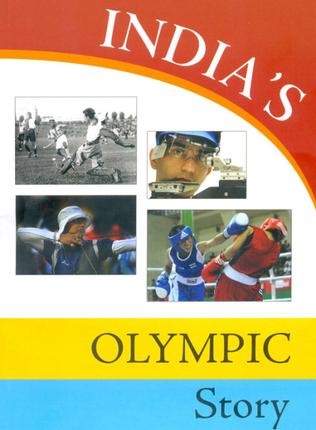
An outcome of three-way collaboration between British Council,
Abhinav Bindra Foundation and Tulika Publishers, India’s Olympic Story is
a slim book targeted to teenagers but can also be useful to anybody interested
in a quick read about the Olympic Games and the Indian achievements at this
greatest sporting extravaganza.
Divided in to two sections, the first part of the book gives us the
historical details about the Olympics. It delineates the mythology behind the
beginning of the ancient Olympic Games which dates back to 776 BCE. The saga of
the modern Olympics started in 1896 when its first edition was organised in Athens,
Greece. The first section also has information about the Indian association
with the Olympic movement. In 1900,
Norman Pritchard, an Indian of British decent, who had entered the Paris
Olympic Games casually, became first Indian to win a medal. Later, in 1927,
Indian Olympic Association was formed and the very next year a contingent of 22 players
was formally sent to participate in the Amsterdam Olympics. The team returned
with gold in hockey. After that the country has participated in every edition
of the Summer Olympics. In the Winter Olympics, Indian participation has been
occasional. The most delightful inclusion in this section is the information
about the Paralympic, the special version of the Olympics that is organised for the
physically challenged people. There is also a chapter on traditional Indian
games and rural Olympics.
The second half of the book profiles some of all-time great Indian
Olympians. Noteworthy among them are Dhyanchand, the magician of field hockey,
Milkha Singh, the flying Sikh, Abhinav Bindra , the gold medalist shooter and K
D Jadhav. Out of these four, Jadhav
remains an unsung Olympic hero despite being the first individual medal winner
of independent India. A big achievement by any yardstick. It was K D Jadhav who
‘paved the way for future Olympic athletes with his determination to excel,
unflinching dedication, single-minded focus and never-say-die spirit. He
achieved the impossible without having access to state-of-the-art training
facilities and money’
Aesthetically produced and beautifully illustrated, the book is also
replete with interesting anecdotal stories, games
trivia and witty cartoons.
Subscribe to:
Posts (Atom)