Showing posts with label Abdullah Khan Writer. Show all posts

Sunday, July 08, 2018

GHAZAL


ग़ज़ल


उन्हें नश्तर से दिल पे वार करना आता है
हमें भी अपने जख्म शुमार करना आता है

उनको न आना है तो न आएं मेरी बला से
मुझे क़यामत तक भी इंतज़ार करना आता है

बेलौस गुज़र जायेगा इश्क़ के तूफां से वो
आग का  दरिया उसे  पार करना आता है

बेवफाई शौक़ उनका और इश्क़ जुनूं मेरा
उन्हें ज़फ़ा तो मुझे प्यार करना आता है

भला दोस्तों का यक़ीन  क्यों न करता वो
जिसे रक़ीबों पे भी ऐतबार करना आता है

चमन को उजाड़ने का वे हुनर रखतें हैं और

हमें बयाबां को गुल- ए- गुलज़ार करना आता है

Sunday, May 06, 2018

A NEW GHAZAL


झूठी  वतन परस्ती का यह कारोबार बंद करो
वहशत की तिज़ारत,नफ़रत का बाजार बंद करो


देखो झुलस रहीं हैं  कलियाँ कितनी चमन में
साथ लाये हो  जो,वो मौसम-ए -बहार बंद करो


तेरे इश्क़ से तेरी हमदर्दी से परेशां हैं बहुत लोग
अपना ये झूठा दिखवा ये अपना प्यार बंद करो


मैं जनता हूँ की नहीं है उल्फत तुमको मुझ से
खुदा के वास्ते ये बार बार का इज़हार बंद करो


तेरे फरेब का सलीका है शानदार ,सुभानअल्लाह
चलो मैं तुमसे हार  गया, अब ये तकरार बंद करो


शहर पे  पूरा कब्ज़ा है अब शब-ए -ज़ुल्मात का
अब्द नहीं आएगी वो सहर  इंतज़ार बंद करो

Saturday, December 15, 2012

My Review of Namita Gokhale's Book in December issue of The Book Review


The planet called earth has been a lonely place for the women. You move across the continents and across the societies and can see that the fair sex is treated more as some sort of asset than as normal human being. Some societies, we feel, places the women on a higher pedestal but that too is a ploy of the male-centric society to control the feminine power. In India, it must be remembered, the Ganika and Devdasi systems were also an acceptable part of the same society which refers to women as Devi. In some societies, especially in the Middle East, women are supposed to be the gifts of God, so they should always be kept gift wrapped. The various kinds of burqas and veils were invented to keep them covered.
The sound of women’s loneliness and the eagerness to break free from the manacles of the male-centric social norms reverberate in many of the stories of this collection of short stories by the seasoned author Namita Gokhale.

 ‘Life in Mars’, the opening story, tells us about the aloneness of Madhu Sinha, a widow and a mother of three ‘duplicitous sons’ who have virtually abandoned her. As she is fighting with her solitude and a debilitating illness, the arrival of Udit Narain, a young man who feels chasing a girl or a job is sheer waste of time, suddenly ignites a desire to live her life again. The author describes the dilemma as well as the eagerness of a middle aged woman while planning to enter in to a new relationship. The title story, The Habit of Love, also has a widow as the protagonist. But unlike Madhu, the main character of this story is not alone and has her daughters by her side but that doesn’t stop her from grieving perpetually for the loss of her long dead husband. When she goes on a vacation with her daughters to Nepal, one of her daughters, after seeing the mountain peaks, asks her: how does a mountain know it is a mountain?’ Discomfited by the question she travels back to her happy days and thinks of her husband who might have given a perfect answer to this question. And there she realises how she has internalised the pain she had received by losing her husband and how ‘the habit of grief’ has created walls between her and her daughters. The opening sentence of this story is very thought-provoking and it reads: The habit of grief can be as insidious as the habit of love.
There is another outstanding story that comments upon the position of a woman in our society. In ‘Love’s Mausoleum’, Malika is deserted by her husband for not bearing any child for him. She visits Taj Mahal and discovers that Shahjahan had built Taj Mahal for his favourite wife Mumtaz.  And , she is  outraged when the guide explains to her about the tombs built outside the Taj Mahal by emperor Shahjahan for his two other wives because (unlike Mumtaz) they were childless. Time has changed, but not the attitude of male chauvinistic society, she angrily thinks.
There are two stories which have two famous female characters from Mahabharata as their protagonists. In one story, Kunti tells us about her dilemma to reveal that Karna is her son. Kunti as mother craves to hug her first born but the fear of social stigma is so huge that she let her son go. What if Kunti were a man?  In the other story a maid servant of Qandhari, wife of king Dhrutrashtra, tells us about her queen’s struggle as a woman, as a wife and as a mother. In both the stories, Kunti and Qandhari are not portrayed as the larger than life mythological characters but as the regular women who have their own set of dreams and insecurities.
Each of the thirteen stories is written in Namita’s signature style.


Sunday, December 02, 2012

A GHAZAL

ایک غزل 

اشاروں سے تم نے کچھ تو کہا ہے
یا اٹھلانے کی یہ تیری  ادا ہے

نگاہیں تو  میری سب کہہ رہی تھی
 تم نے نہ سمجھا  تو کس کی خطا ہے

جو میں بے وفا ہوں یہ تم کہہ رہے ہو
  کہ تم بے وفا ہو یہ سب کو پتہ ہے

جو تیرے لب پہ ہے  وہ ٹھیک ہے
 یہ بھی بتا دو جو دل میں چھپا ہے

  قاتل ہے منشف اور مظلوم ملذم
یہ  کیسی عدالت یہ کیسی سزا ہے

نمرود فرون سب کےسب  مٹ گئے
سونچا ہے کیا  تو کی  کوئ  خدا ہے

عبدللہ خان ---
एक ग़ज़ल 

इशारों से तुमने कुछ तो कहा है 
या इठलाने  की ये  तेरी  अदा है

निगाहें  तो मेरी   सब कह रही थी 
तुमने न समझा  तो किसकी खता  है 

जो  मैं बेवफा हूँ ये तुम कह रहे हो
 कि  तुम बेवफा हो ये सबको  पता है

जो तेरे लब पे है  वो  ठीक है  
ये भी बता दो जो  दिल में छुपा है

 क़ातिल है  मुन्शिफ़  और मज़लूम  मुल्ज़िम  
ये  कैसी अदालत  ये कैसी सज़ा  है

निमरूद फ़िरौन  सब के सब  मिट गए 
सोंचा है क्या  की तू कोई  खुदा है  
---अब्दुल्लाह खान 

Tuesday, November 20, 2012

BOOK REVIEWS


TOKE by JUGAL MODY (Originally published in The Book Review, November 2012)


Toke means puffing a pipe or pot filled with Marijuana. And true to its title, you get high with the novel’s surreal plot. The story is set in motion as you are introduced to Nikhil the protagonist who is fighting to come out of ganja-induced hallucinatory dreams. He is a regular guy with a regular job and suffers from regular bouts of insecurity, jealousy and disillusionment. Toking is his only escape from his not-so-interesting quotidian life. One day when he is in the middle of a cannabis induced hallucination, Lord Vishnu, the preserver God from the Hindu trinity, makes an appearance and joins Nikhil and his friends in a session of pot smoking. In between, He tells Nikhil the world is going to end in next 72 hours and Lord Vishnu has no time for another incarnation to save the world. So, He entrusts Nikhil with the responsibility of saving the humanity from total destruction. He warns Nikhil if Lord Shiva, the destroyer and reproducer of the trinity, comes to know about the imminent extinction of the human race, He will be more than  happy to destroy this world Himself and then to rebuild it. Nikhil who first thinks it is some sort of joke from that strange person who is wearing a dress like the gods from the mythological serials. But, soon he realises that the person is real Lord Vishnu and the demons have already unleashed mysterious maggots to transform every single human being into zombies. He accepts the challenge and set out with his friends to save the humanity.
The special about this book is the inventiveness of its narrative structure. Plus, the cleaver use of language makes this book highly readable. The dialogues sound real and give you an insight into the lingo of the generation X. At times, the story becomes confusing but the things get cleared once you progress further. Jugal Mody might not be applauded for the literary merits of his debut book by the critics but will certainly get thumbs up from his readers for writing such a fantastical and fun filled book.

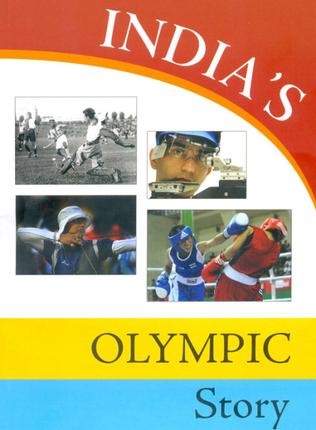
India’s Olympic Story 

(The review published in The Book Review, November 2012 issue)


An outcome of three-way collaboration between British Council, Abhinav Bindra Foundation and Tulika Publishers, India’s Olympic Story is a slim book targeted to teenagers but can also be useful to anybody interested in a quick read about the Olympic Games and the Indian achievements at this greatest sporting extravaganza.  

Divided in to two sections, the first part of the book gives us the historical details about the Olympics. It delineates the mythology behind the beginning of the ancient Olympic Games which dates back to 776 BCE. The saga of the modern Olympics started in 1896 when its first edition was organised in Athens, Greece. The first section also has information about the Indian association with the Olympic movement.  In 1900, Norman Pritchard, an Indian of British decent, who had entered the Paris Olympic Games casually, became first Indian to win a medal. Later, in 1927, Indian Olympic Association was formed and  the very next year a contingent of 22 players was formally sent to participate in the Amsterdam Olympics. The team returned with gold in hockey. After that the country has participated in every edition of the Summer Olympics. In the Winter Olympics, Indian participation has been occasional. The most delightful inclusion in this section is the information about the Paralympic, the special version of the Olympics that is organised for the physically challenged people. There is also a chapter on traditional Indian games and rural Olympics.

The second half of the book  profiles some of all-time great Indian Olympians. Noteworthy among them are Dhyanchand, the magician of field hockey, Milkha Singh, the flying Sikh, Abhinav Bindra , the gold medalist shooter and K D Jadhav. Out of these four,  Jadhav remains an unsung Olympic hero despite being the first individual medal winner of independent India. A big achievement by any yardstick. It was K D Jadhav who ‘paved the way for future Olympic athletes with his determination to excel, unflinching dedication, single-minded focus and never-say-die spirit. He achieved the impossible without having access to state-of-the-art training facilities and money’

Aesthetically produced and beautifully illustrated, the book is also replete with interesting anecdotal stories, games trivia and witty cartoons. 


Sunday, November 04, 2012

My Interview of Nayantara Sahgal


Indira and India

ABDULLAH KHAN
Nayantara Sahgal. Photo: V Sreenivasa Murthy
The HinduNayantara Sahgal. Photo: V Sreenivasa Murthy
We have “ruling families” all over the country, so why single out Sonia and Rahul Gandhi, asks Nayantara Sahgal.
Just released 'Indira Gandhi: Tryst With Power' by Nayantara Sahgal is an in-depth study of Indira Gandhi‘s style of functioning and political leadership which, according to the author, “marked a drastic break with the democratic tradition of her family and Indian politics.” As a member of the Nehru-Gandhi extended family, Nayantara Sahgal had observed her cousin Indira at close quarters and had access to the kinds of documents which an outsider can’t think of laying their hands on. That is why this beautifully written book gives its readers an opportunity to have a peek in to the mind of enigmatic Indira Gandhi. In this interview, Sahgal talks about Indira, India and dynastic succession in politics.
Tryst with Power is different from the other biographies of Indira Gandhi because it gives an insight into her inner life. Please tell us how this book was conceptualised. Do you think it would have been possible for anybody else to write such an intimate biography?
It is not a biography but a study of her political style. It interested me because her style was a definite departure from that of her two predecessors and from the way the Congress party had functioned until then. The book started as a paper I was asked to contribute to a conference on "Leadership in South Asia" at SOAS (School of Oriental & African Studies), London University, in 1974. When my conclusion that we were heading toward authoritarian rule proved to be correct, I expanded it into a book. As a close relative I was able to give it a personal dimension.
What do you think about Indira Gandhi’s decision to intervene in the Bangladesh liberation war? Who benefited from its outcome, India, Indira Gandhi or both?
It was an act of statesmanship and great courage to support East Bengal’s fight to restore its elected government. The whole region benefited by the result, Bangladesh most of all.
How do you look at the stunning defeat of Indira Gandhi in 1977 and then her miraculous rise, like a proverbial phoenix, three years later?
Indians rejected authoritarian rule in 1977 when they defeated the Congress. Equally they showed their good sense in re-electing Indira Gandhi and the Congress party three years later, because the quarrelling coalition of the Janata Party had let them down so badly, failing to punish those who had been responsible for the Emergency’s excesses.

Saturday, November 03, 2012

A Review in Hindu Literary Review


Mystical musings

ABDULLAH KHAN
SHARE  ·   COMMENT   ·   PRINT   ·   T+  
Rumi: A New Translation; Farrukh Dhondy.
Special ArrangementRumi: A New Translation; Farrukh Dhondy.
This book offers a great excuse to revisit the poetry of Rumi.
Rumi: A New Translation; Farrukh Dhondy, Harper Perennial, Rs.299.
Reynold A. Nicholson, renowned English Orientalist and Islamic scholar, once said of Sufi mystic and poet Mevalana Jalaluddin Rumi: “The influence of his example, his thought and his language is powerfully felt through all the succeeding centuries; every Sufi after him capable of reading Persian has acknowledged his unchallenged leadership. To the West, now slowly realising the magnitude of his genius ... he is fully able to prove a source of inspiration and delight not surpassed by any other poet in the world’s literature.”
Nicholson made this statement many decades ago but it still holds true. While Rumi has been widely read for the last eight centuries in countries where Persian is spoken, he has now become popular in Europe and the U.S. When it comes to rendering Rumi’s works into English, prominent names include Reynold A. Nicholson, Arthur John Arberry, Coleman Barks and Nadel Khalili. Both Nicholson and Arberry were British scholars and translated Rumi’s poetry either literally or semi-literally. But, the person who made Rumi a household name in the U.S., Coleman Barks, doesn’t know Persian and his translations are not actually translations but reinterpretations of English translations. That is why many critics point out that Barks’ translations (despite their popularity among general readers) are superficial. Another translator Nadel Khalili was a native of Iran and familiar with the essence of Rumi’s mystical musings. But Khallili could not replicate the rhyme schemes of Rumi.
When Farrukh Dhondy, the well known novelist and screenplay writer, embarked on a mission to render Rumi’s poetry in English, he kept three things in his mind. One, the English version should have the fragrance of the original verses. Two, the translation of a poem should be a poem. Three, he would stick to Rumi’s rhyme schemes. The result of his labour is delightful.
Dhondy’s translations reflect that he understands the cultural and philosophical context of Rumi’s poetry. Though, like Barks, he is not a scholar of Persian language but understands Urdu, a language which borrows heavily from Persian vocabulary. And that might have helped him to decipher the real Rumi. This offering is a beautiful excuse for us to revisit Rumi.